Frequently asked questions (FAQs)
Below you will find answers to a range of questions on our proposals for Castle Way Energy. We will continue to keep these questions and answers up to date with the latest and most relevant project information.
If your question is not listed below, please contact us and we will do our best to provide you with an answer. Please note however that we may not yet have full answers to detailed technical questions at this stage of the project, while surveys and studies are still ongoing.
General
1. Who is the applicant?
The Applicant for the Castle Way Energy DCO submission to the Planning Inspectorate will be BSSL Derbyshire 1 Ltd. BSSL Derbyshire 1 Ltd. is a Special Purpose Vehicle (SPV) company and wholly owned subsidiary of Brockwell Energy, created to develop Castle Way Energy.
Brockwell Energy is a multi-technology Independent Power Producer (IPP) specialising in renewable energy infrastructure. Since 2017, Brockwell have created a pipeline of 3.5GW of projects in onshore wind, solar and battery storage, and leading the way in setting new standards in the renewable energy industry.
Brockwell Energy is committed to providing innovative energy solutions that drive growth and progress, enabling the UK to meet the demands of a sustainable future. Brockwell’s projects prioritise environmental responsibility and focus on building energy solutions that bring lasting value, and support both economic growth and ecological resistance.
2.What is Castle Way Energy?
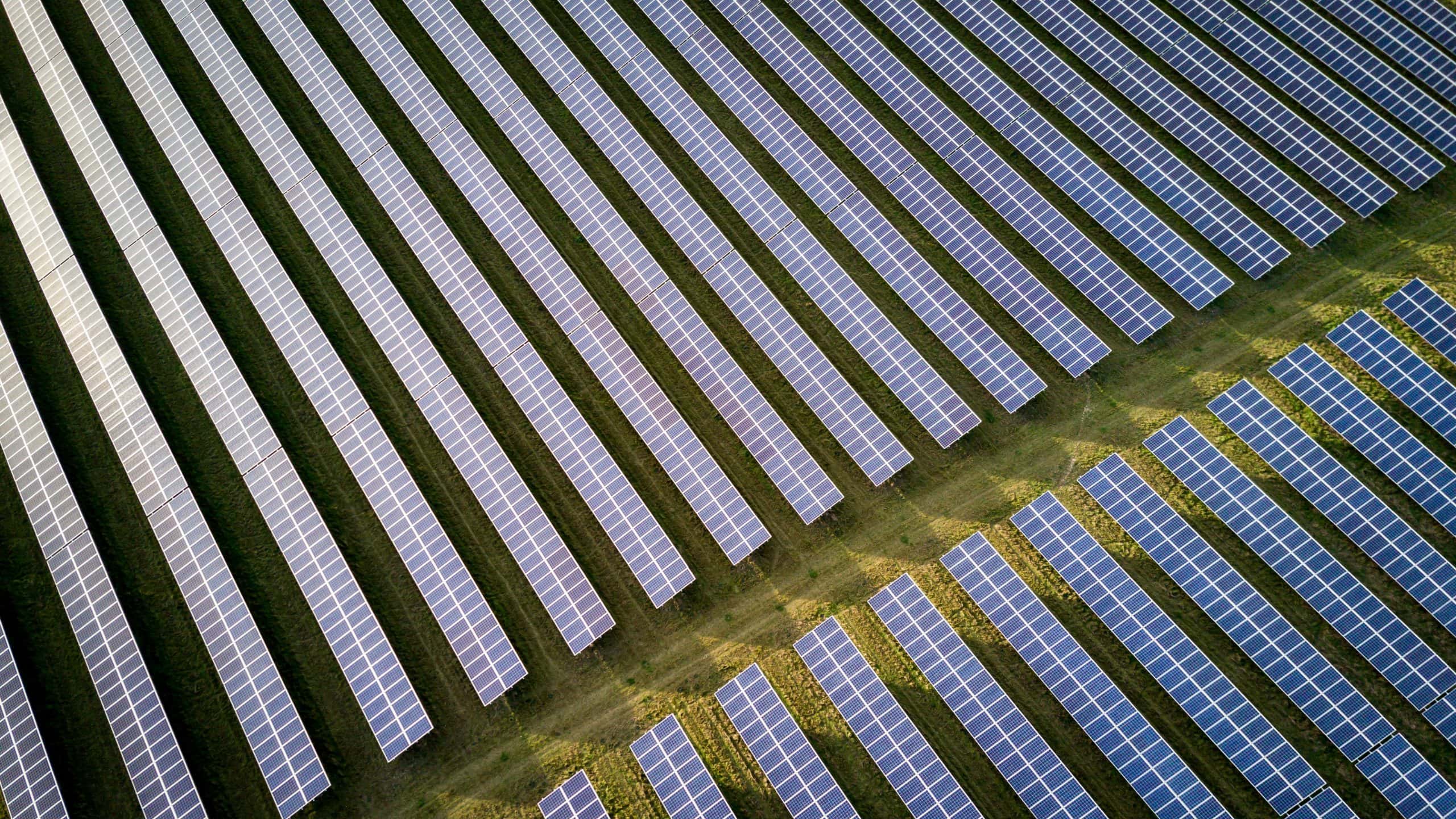
Castle Way Energy is a proposed ground-mounted solar energy generating station and battery energy storage system located to the northwest of Derby. The project would connect up-to 300 megawatts of solar power, along with up-to 200 megawatts of battery storage, to the electricity transmission network at National Grid’s Willington East substation. Our proposals also include associated infrastructure, works to create, enhance and maintain the natural environment, and a Legacy Fund that would provide financial contributions to local projects.
3. Why here?
One of the key factors for determining an appropriate location for solar farms is the proximity of the site to a suitable Point of Connection (POC) to export power to the electricity distribution network. Brockwell Energy have an agreement with National Grid for a 300MW connection into the Willington 400kV East substation.
Alongside the POC suitability, the site selection process looked at other various sensitive receptors, planning considerations and sites with environmental designation.
4. Will the energy generated from Castle Way Solar Farm be used to subsidise the electricity and energy bills of local residents?
The power generated from Castle Way Energy will feed directly into the national grid. The UK’s National Grid is structured around industrial hubs meaning that electricity generated from solar farms is inputted into the grid and allocated according to national demand.
Whilst Castle Way Energy will not reduce your energy bills overnight, it will contribute to boosting the UK’s energy security, which should help to reduce the volatility of energy prices in the future. Solar power is significantly cheaper to produce than power from fossil fuel sources.
5. Who will decide whether the project should be granted planning permission?
Castle Way Energy will be classified as a Nationally Significant Infrastructure Project (NSIP) under the Planning Act (2008) because it would generate more than 100 megawatts (MW) of power.
NSIPs apply for planning permission through the Development Consent Order (DCO) process. DCO applications are subject to detailed scrutiny by an independent panel of inspectors appointed by the Planning Inspectorate (PINS), before the final decision about whether or not to grant planning consent is determined by the Secretary of State. Although the local planning authority doesn’t decide whether or not to approve the application, they are a key consultee involved throughout the DCO process and in helping to shape the final decision.
For more information on the DCO application process, please visit the Planning Inspectorate’s website.
6. Will you capture feedback and engage with the community?
Brockwell Energy will be engaging with the local community and relevant local organisations to understand feedback and discover how best to deliver value to the nearby community. Castle Way Energy represents a significant investment in the local area and ensuring a lasting and effective community offering is a priority for Brockwell.
We have now commenced Phase 1 Engagement for Castle Way Energy, which will run from Tuesday 16th June until Tuesday 28th July 2026, where we are keen to hear your views. We’re hosting an online webinar where you can find out more information about the proposals and provide your feedback, taking place on 2nd July 2026.
Following our Phase 1 Engagement, we will return to the community in the next stage of our pre-application engagement process for our Phase 2 Engagement, currently scheduled for late-2026. Public events will be held, and feedback will again be sought on our detailed proposals.
Castle Way Energy will be completing an extensive engagement programme, with the first round of consultation taking place in early 2026, and the formal statutory consultation taking place later in 2026. These consultation periods will provide an opportunity for the local community to share their thoughts on the proposals and inform the ongoing design process.
7. When do you expect to submit an application?
We are currently aiming to submit a Development Consent Order (DCO) application to the Planning Inspectorate in 2027.
8. If the project gets approved, when will it be constructed and operational?
We are currently working to a timeline that would see the decision made by the Secretary of State for Energy Security and Net Zero by 2029.
We would then expect that construction will take approximately 18-24 months to complete.
9. What is the possibility of Castle Way Energy increasing in size?
Brockwell Energy have secured an 300MW export and 200MW import agreement with National Grid at the Willington 400kV substation, meaning that we do not expect to exceed either of these figures.
The design of the scheme is subject to refinement as we get more information from our technical assessments (such as environmental impact, visual impact) and surveys, as well as in response to feedback from community, specialist consultees and other stakeholders.
10. Is the Chesterfield to Willington project related to Castle Way Energy?
We are aware that National Grid are bringing forward the proposed Chesterfield to Willington electricity transmission network reinforcement DCO. The project is a separate development and not linked to our proposal.
We are engaging with National Grid, and as with any proposed project located nearby, our Development Consent Order (DCO) application will include an assessment of the potential cumulative effects, should details of this project be available within the appropriate timeframes.
11. Why can’t solar panels be placed on rooftops?
Roof mounted solar is becoming an increasingly familiar sight, particularly when it comes to new build developments across the UK. Recent Government policy is supportive and promotes more rooftop solar in the UK. However, rooftop solar alone cannot deliver the volume of cheap and reliable low-carbon electricity needed to meet national climate and energy security targets. Both technologies play an important role in the UK’s future energy mix.
12. What is the status of Castle Way Energy?
Castle Way Energy is still at an early stage of development, and extensive environmental assessments are underway. Desk-based assessments, site visits and surveys are being undertaken to inform the design and to ensure that environmental constraints are understood and impacts are avoided, minimised and/or mitigated.
Once this information is obtained, including stakeholder views, we seek to provide a Phase 2 engagement later in 2026 with a DCO Application in Summer 2027.
13. What is Phase 1 Engagement?
At this stage of our pre-application process, we are consulting our stakeholders on our indicative site boundary for the solar array and cable route. This Phase 1 Engagement, intended to seek early feedback on the overall energy development and the layout shared. We aim to engage as early as possible on our projects once they have passed certain criteria in terms of their feasibility and certainty to obtain feedback prior to the design of the project being finalised, so that design change requests and feedback can be taken into consideration before a design is finalised later in 2026.
14. What information is not available at this stage?
Findings from ongoing environmental assessment are not available at this stage. Initial results will be shared at Phase 2 engagement with the final assessment information in the Environmental Statement at the DCO Application
Detail on construction methodologies is not shared at this stage as these elements are still being developed and will be influenced by ongoing survey assessment and the technical studies. Initial thoughts will be shared at Phase 2 Engagement (To be confirmed) where feedback will be sought prior to submission of the DCO Application
Design information is only shared for the solar array at this time, further design matters such as point of connection, cable array and environmental mitigation and enhancement will be shared at Phase 2 Engagement and contained within the DCO Application.
15. Who are Rothamsted Research?
Rothamsted Research is the oldest continually operating agricultural research station in the world.
Brockwell Energy’s partnership with Rothamsted Research will seek to understand how solar farms be designed for significant land use gain across various metrics including CO2 sequestration, soil health, biodiversity, crop/livestock yield, and solar yield.
This includes using sheep to graze parts of the site and encouraging specific pollinators and pest control species by growing the right mix of wildflowers in the right place.
Brockwell Energy will look to include new initiatives supported by this research into the proposals for Castle Way Energy.
You can find out more about Rothamsted Research here: www.rothamsted.ac.uk/about-rothamsted-research
16. How will Castle Way Energy connect to the grid?
A grid connection corridor is required to connect the project to the Willington 400kV Substation.
The cable route design is not yet fixed and is going through an optioneering process. This early work has identified several routes available to the proposed project which are currently all being presented in order to obtain feedback and ensure that a full spectrum of options is being considered in the design evolution process.
We are looking at the engineering requirements, local context and environmental and community constraints. This includes avoiding residential areas, large waterbodies, woodlands and historical features. We are also working to understand areas where underground cables would be preferred to above ground infrastructure, based on a range of potential impacts. Our aim is to work through a considered design process to arrive at the optimum route and mix of below or above ground infrastructure.
Environmental impact
17. Will there be a visual impact?
We are committed to designing the scheme to complement the surrounding area. We will seek to retain as much of the existing trees and hedgerow as possible, and where beneficial, there will be landscaping improvements, including screening, to minimise visual impact and strengthen landscape character and structure. A detailed landscape and biodiversity enhancement plan will be included with the planning application.
18. What are the impacts on the local environment and biodiversity?
Solar farms have been proven to produce a biodiversity benefit, and Brockwell Energy are committed to ensuring that impacts are minimised and that the project will deliver biodiversity and habitat improvements.
The project team are undertaking a series of assessments and surveys related to ecology, biodiversity, and habitat management. This work has involved several species-specific surveys and a botanical survey. Castle Way Energy presents an opportunity to bring significant ecological and biodiversity enhancements as part of a comprehensive biodiversity management plan to the area.
19. Is the project sited on agricultural land?
Government policy identifies how land type should not be a predominating factor in determining the suitability of sites. Where sites are located on agricultural land, government is supportive of solar that is co-located with other functions (for example, agriculture, onshore wind generation, or storage) to maximise the efficiency of land use.
The land under option is a joint agreement with local landowners, many of whom are local farmers seeking to diversify their income. Income generated from hosting solar infrastructure can subsidise and therefore protect the continued operation of an agricultural business.
We want to also reiterate that the land can still be productive with grazing and potential other dual use proposals. These activities, coupled with routine site maintenance will maintain employment on the land throughout the projects 40-year lifespan.
Unlike other developments (e.g housing), the land can be returned to full agricultural production after decommissioning.
20. Have you considered the impact of flood risk as a result of the proposals?
Solar panels are generally mounted on frames which are driven into the ground on spikes. Normally, no concrete bases are required for the panels which means that the dispersal of rainwater can continue into the ground. Where more permanent bases are required (such as for the transformers) extensive assessment is undertaken, with mitigation provided.
Brockwell Energy will complete an Environmental Impact Assessment (EIA) which will demonstrate that we have undertaken extensive assessment of drainage and flood risk and put in place any mitigation measures to ensure that there is no net increase in water runoff from the site.
21. Will the solar farm generate noise?
Solar farms have very few moving parts and generate very little noise. Transformers are required to convert the electricity to the correct voltage to export, and although not particularly noisy, they do generate a ‘low hum’ at close distances.
22. Will the solar panels be visible from properties?
Visibility of the site from surrounding areas will be a key design consideration. The height of the panels will be relatively low lying therefore much of the site won’t be visible from most local communities.
Provision of mitigation, such as additional screening planting and enhancing the hedgerows throughout the site will also improve screening from local roads and villages.
23. Will solar panels cover the whole area of the proposed site?
We are still at an early stage of the process, and the design will be refined during the course of the project. The final proposals will be shaped by the feedback received through the consultation process and all design decisions will be taken in the long-term interest of the project and local area.
24. How will you protect archaeological finds?
We will be working with conservation officers and relevant stakeholders to agree measures to protect any archaeological finds. These works will be undertaken as a part of the Environmental Impact Assessment (EIA) which will need to demonstrate that we have undertaken extensive assessment of any potential archaeological finds.
25. How and when can I see the results of the environmental surveys?
The environmental effects arising as a result of the development, including (but not limited to) Landscape and Visual and Biodiversity will be reported in an Environmental Statement (ES) which will be submitted with the DCO Application.
The design is constantly evolving as further information from desk study, surveys, and feedback from consultees and the public become available.
26. What will be provided at Phase 2 Engagement?
Supporting information will be shared at the next engagement stage, referred to as Phase 2 Engagement. At that point, we will have available:
- Initial findings from environmental impact assessment work undertaken to date, and details of how this is influencing the design of the proposed development;
- Detailed plans and drawings of the proposed development, including access and construction details;
- A summary of engagement undertaken to date and how feedback has informed the proposal.
We will return to the community in the next stage of our pre-application engagement process, where there will be further opportunities to provide feedback to the team. This will be Phase 2 Engagement, currently scheduled for late-2026. Public events will be held, and feedback will again be sought on our detailed proposals.
Community benefit offering
27. Will there be community benefits as a part of Castle Way Energy?
Brockwell Energy is committed to being a force for good for all our neighbours and host communities.
Alongside the benefits that this project brings in terms of net zero, and energy security and affordability, Brockwell also aims to bring localised benefits to the area by working with those local communities hosting this project through offering a Legacy Fund. Brockwell Energy will seek views on how this Legacy Fund could be delivered, including different options for the distribution of this funding in our statutory consultation.
Get in touch:
- Email [email protected]
- Write to us at: FREEPOST CASTLE WAY ENERGY (no further address or stamp required)